Launch offer — valid today only

📄 Digital book in PDF · read it on your phone or print it

Voice Evacuation Systems in Drawings: From the Amp to the Acceptance Test One Topic on Every Page

Amplifiers, 70 V taps, tap math, speaker layout, intelligibility, survivability, troubleshooting and acceptance testing. Each topic gets its own page: the drawing first, then what you need to remember. 69 illustrated pages.

SEE THE BOOK, DRAWN PAGE BY PAGE

🔒 Secure checkout · PDF by email · 30-day guarantee

Every topic, its own pageEvery circuit and every calculation drawn, with the explanation right beside it
69 illustrated pages9 parts, from horn vs. voice to what the inspector usually asks
Up-to-date sourcesNFPA 72 (current edition) and NEC Article 760
PDF by emailFormat

Look Inside the Book

Every page has one big drawing and a box with the numbers and steps you need to know:

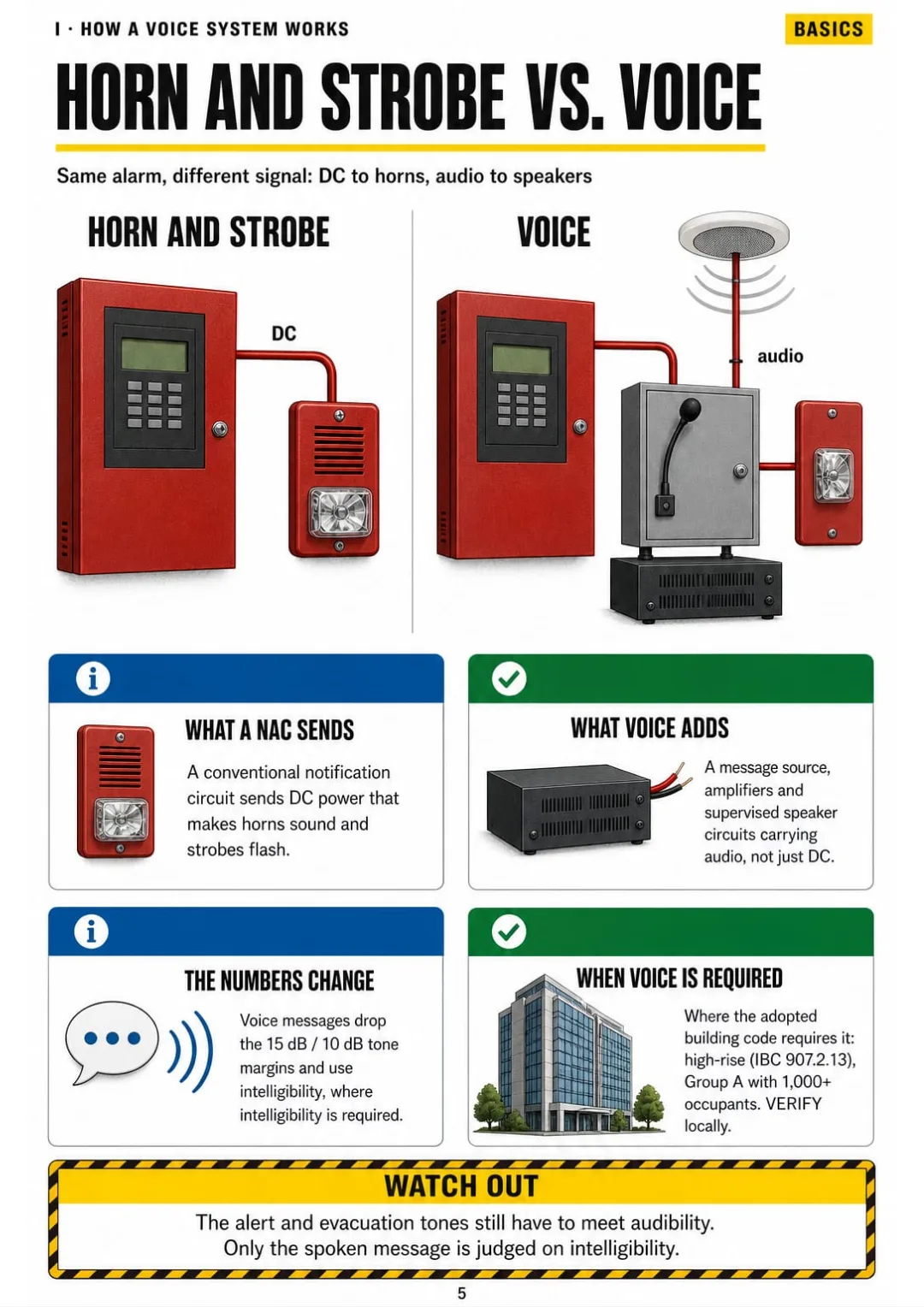
Horns get DC; speakers get audio. Tones still meet audibility, voice meets intelligibility.
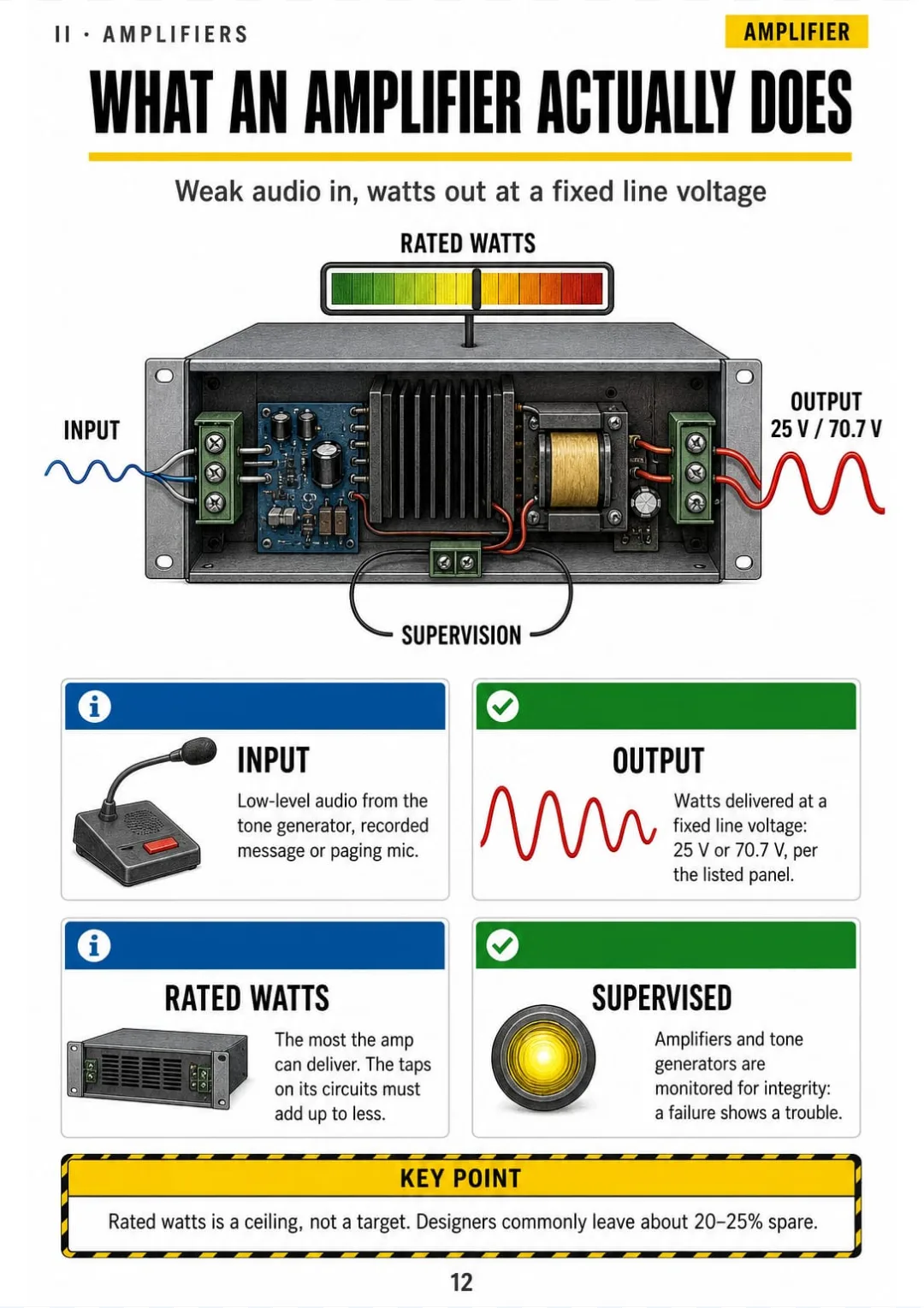
Input, output, rated watts and supervision: the amplifier in one drawing.
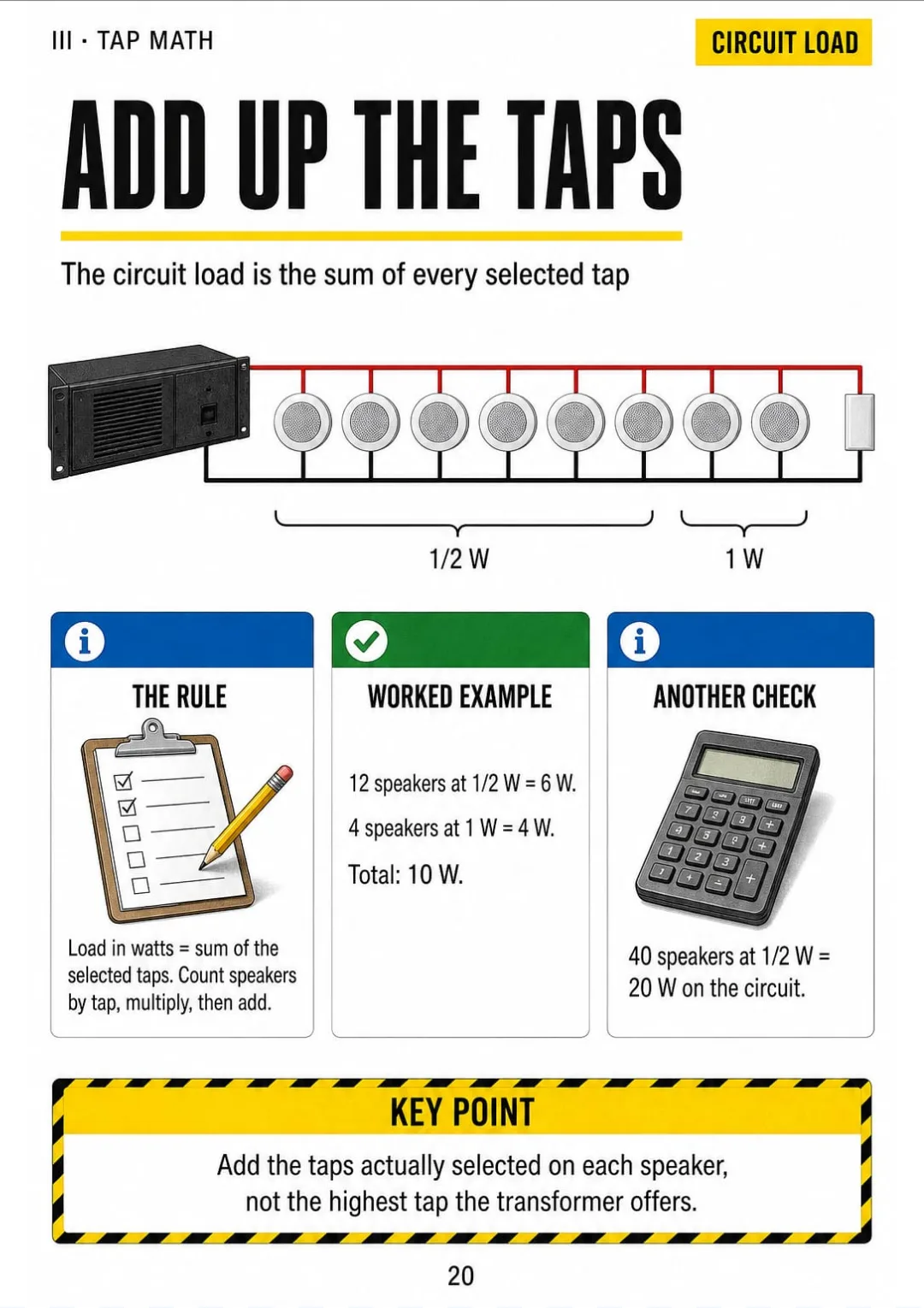
12 at 1/2 W + 4 at 1 W = 10 W on the circuit
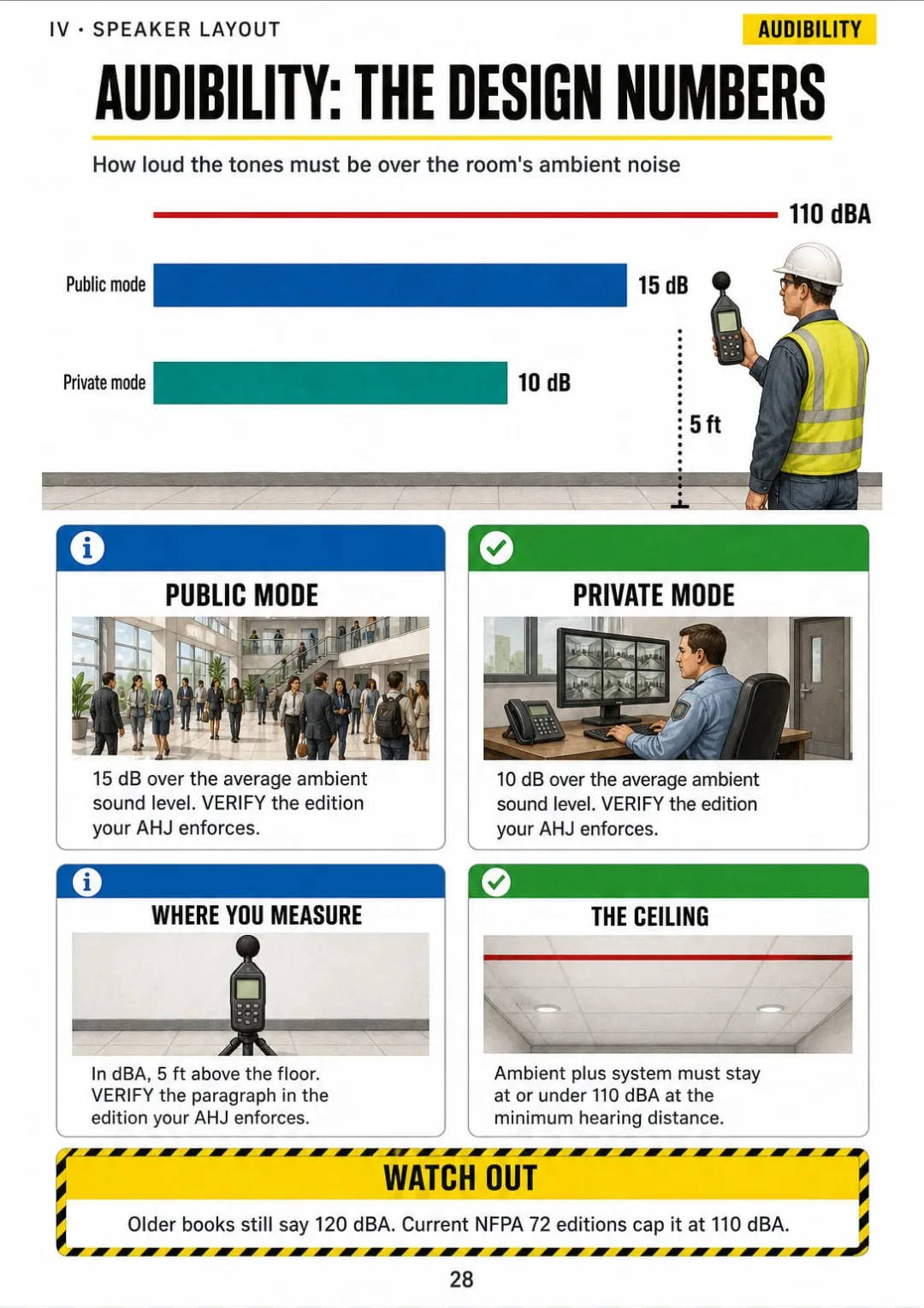
Public mode: 15 dB over ambient or 5 dB over the 60-second max, capped at 110 dBA.
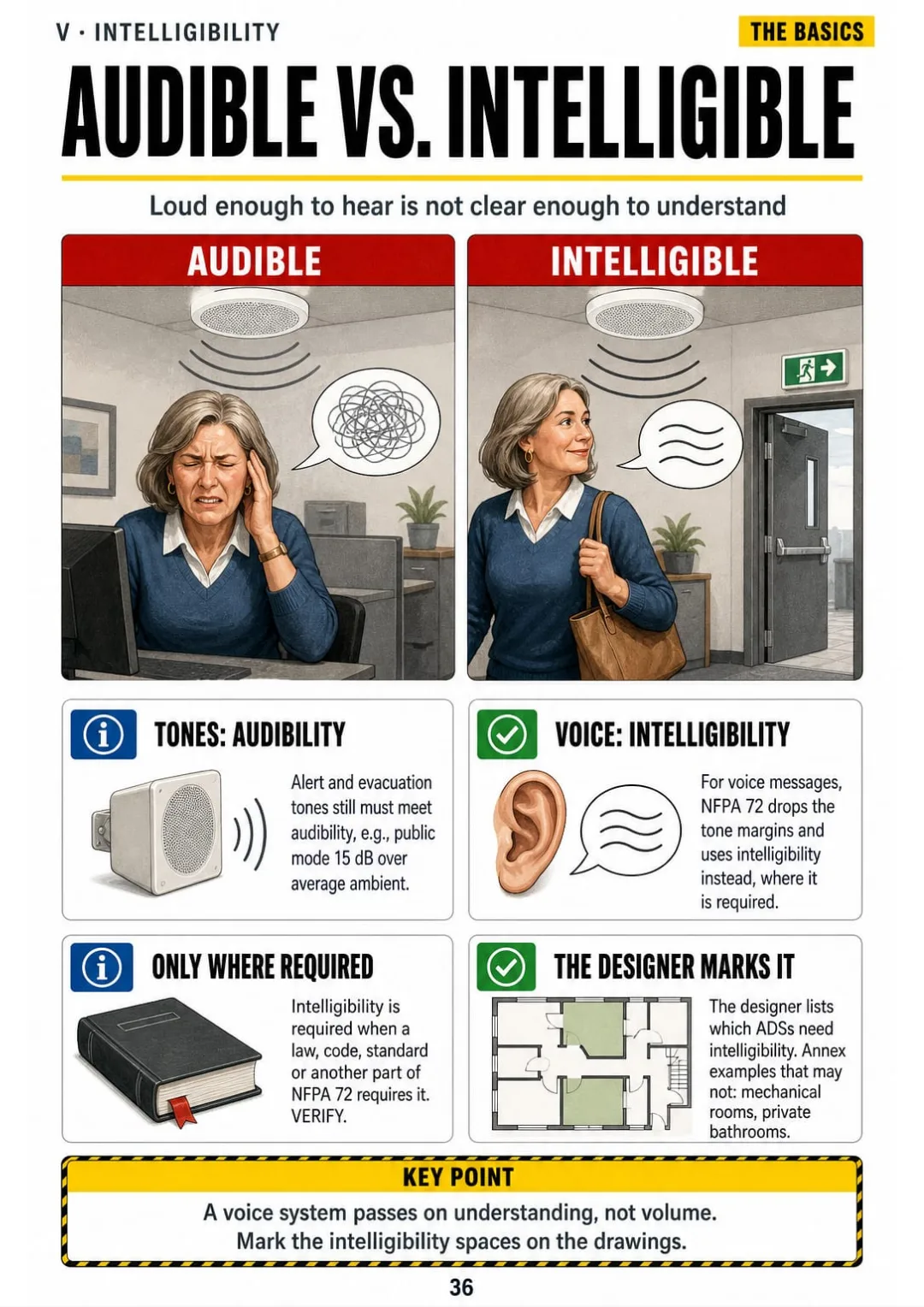
Tones are judged on audibility; voice messages on intelligibility, where required.
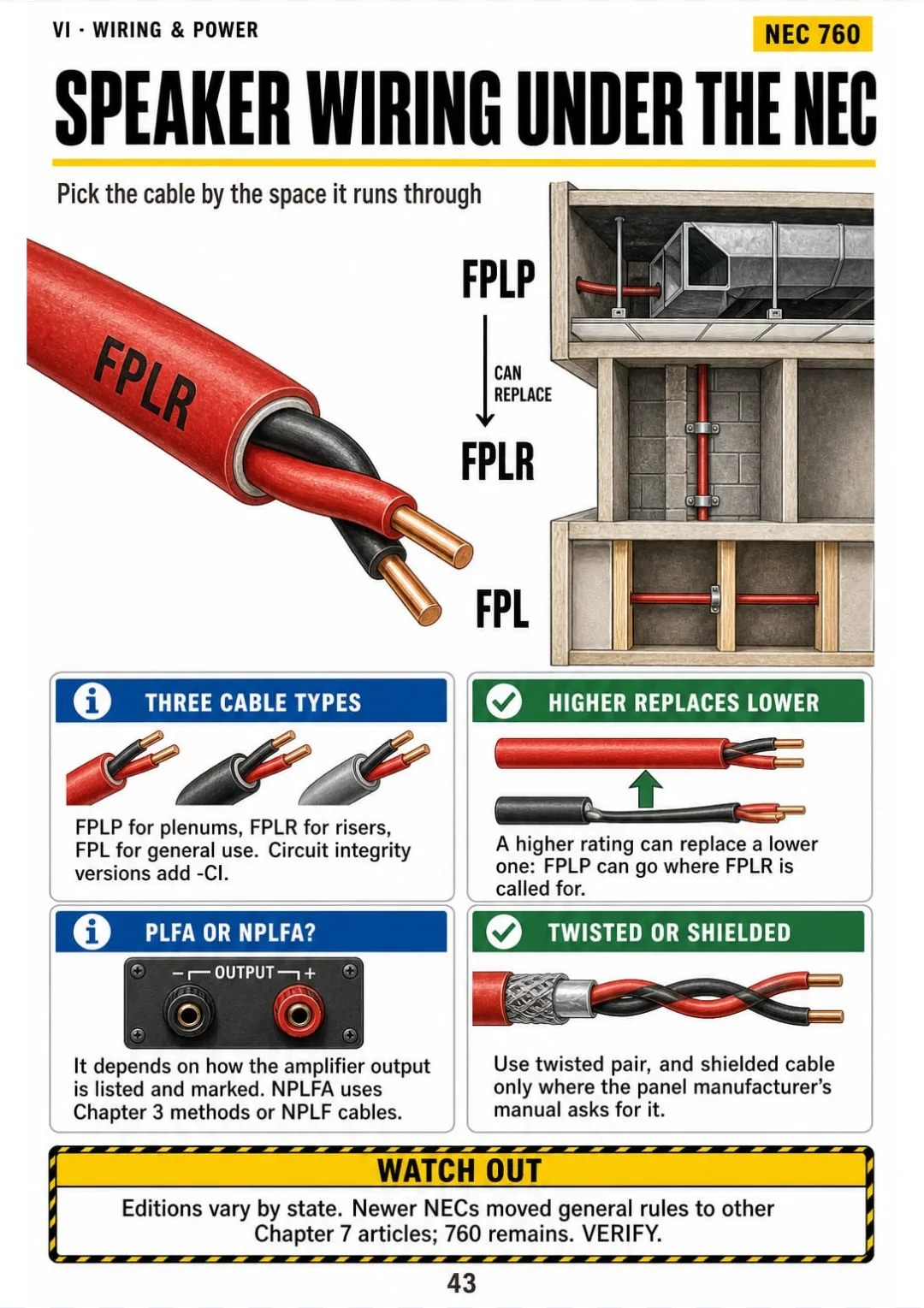
FPLP for plenums, FPLR for risers, FPL for general use, and higher ratings replace lower ones
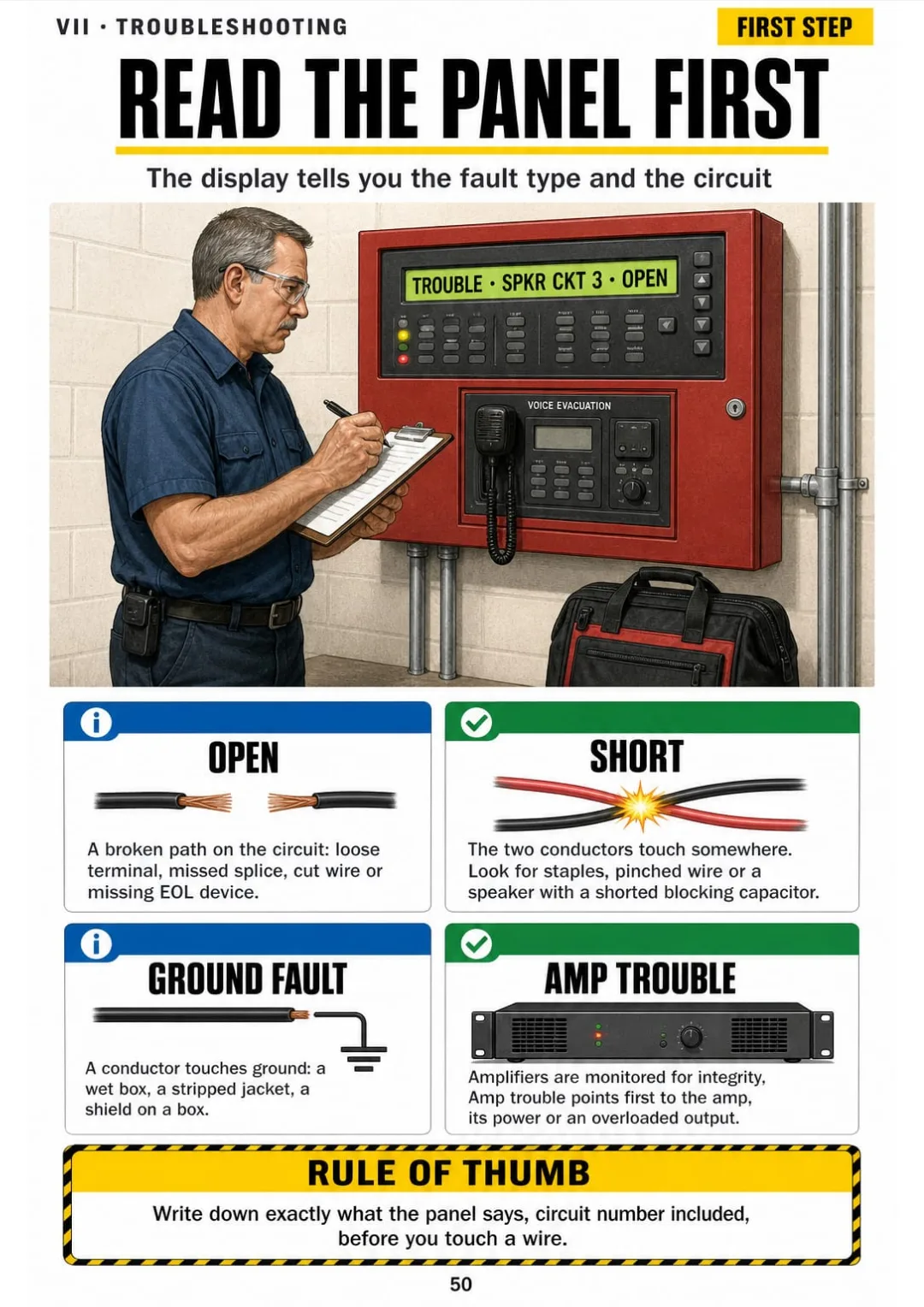
Open, short, ground fault or amp trouble: start on the circuit the display names.
Six things on the clipboard before the AHJ walks in: as-builts to AHJ confirmed.

Swipe to see more →

These are real pages from the book. The table of contents is the full one: 9 parts and 65 topics.

The Problem Isn't You. It's How It Was Explained to You.

You're in a corridor with the speaker schedule in your hand. Sixteen speakers on one circuit, some tapped at 1/2 W, some at 1 W, and the PM wants to know if the amp can carry it.

The manual covers it in three paragraphs about constant-voltage lines and wattage taps. It gives you the rule, but it never shows you the circuit.

12 at 1/2 W + 4 at 1 W = 10 W on the circuit

In the book, that circuit is one page: twelve speakers at 1/2 W and four at 1 W drawn on the line, and the sum in a box: 10 W on the circuit.

Headroom on the amp, the 3 dB tap steps, distance loss, line loss and wire gauge work the same way: each one gets its own page.

You understand the circuit, and you do the math on site without going back to the manual.

COMPARE FOR YOURSELF

The Same Topic, Two Ways to Learn It

THIS
  • The manual: line after line of text
  • Amplifiers explained with words only
  • You show up on site still unsure
The amplifier in an emergency voice/alarm communications system receives a low-level audio signal from the message generator or the paging microphone and raises it to a level suitable for distribution over a constant-voltage speaker line, typically 25 V or 70.7 V RMS. The rated output, expressed in watts, determines the total connected speaker load that may be applied, with consideration of spare capacity. Amplifier operation and the integrity of its output circuits are monitored, and a failure is annunciated as a trouble condition at the control unit.
FOR THIS
  • The amplifier in one drawing
  • Rated watts and supervision in a box
  • You see it and you get it
Input, output, rated watts and supervision: the amplifier in one drawing.
CONTENTS

Take a Look at the 9 Parts and 65 Topics

How a voice system works, amplifiers and speaker circuits, tap math, speaker layout, intelligibility, wiring and survivability, troubleshooting, testing and a final review: 69 pages, all illustrated.

IHow a Voice System Works · pp. 5-11
  1. Horn and Strobe vs. Voice: What Changes
  2. The Voice System Block Diagram
  3. EVACS, MNS and ECS: Three Names, One Family
  4. Alert Tone, Message, Repeat
  5. Zones, Paging and Phased Evacuation
  6. The Fire Command Center and the Paging Mic
  7. Message Priority: Who Wins the Speakers
IIAmplifiers and Speaker Circuits · pp. 12-19
  1. What an Amplifier Actually Does
  2. Why 70 V: Constant-Voltage Lines in One Picture
  3. 25 V vs. 70 V: When Each One Is Used
  4. The Speaker Transformer and Its Taps
  5. Tap, Impedance and Watts: The One Formula
  6. Class A, Class B and Class X Speaker Circuits
  7. The End-of-Line Device and DC Supervision
  8. Backup Amplifiers and Amplifier Supervision
IIITap Math, Worked Out · pp. 20-27
  1. Adding Up the Taps on a Circuit
  2. Headroom: Don't Load the Amp to 100%
  3. Each Tap Step Is 3 dB
  4. From Speaker Sensitivity to dBA in the Room
  5. Distance Loss: −6 dB Each Time You Double It
  6. Line Loss and Wire Gauge
  7. Mixing 25 V and 70 V: The Mistake on Paper
  8. Splitting a Building Into Circuits and Amps
IVSpeaker Layout on the Floor Plan · pp. 28-35
  1. Audibility: The Numbers You Design To
  2. Louder Is Not Clearer
  3. Ceiling Speaker Coverage and Spacing
  4. Wall Speakers and Long Corridors
  5. Stairwells: Where the Message Turns to Soup
  6. Classrooms, Offices and Open Plans
  7. Acoustically Distinguishable Spaces (ADS)
  8. Sleeping Rooms, Mechanical Rooms and Loud Spaces
VIntelligibility · pp. 36-42
  1. Audible vs. Intelligible
  2. The Three Enemies: Noise, Echo, Distortion
  3. Reverberation in One Picture
  4. STI and CIS: What the Number Means
  5. How an Intelligibility Test Is Run
  6. The Recorded Message Itself
  7. Fixing a Space That Fails
VIWiring, Survivability and Power · pp. 43-49
  1. Speaker Wiring Under the NEC
  2. Keeping Audio Away From Other Circuits
  3. Survivability Levels 0, 1, 2 and 3
  4. 2-Hour Cable vs. 2-Hour Enclosure
  5. One Fire, One Zone: Why It Matters
  6. Secondary Power for Voice Systems
  7. Amplifier Current in Alarm: The Battery Killer
VIITroubles and Troubleshooting · pp. 50-57
  1. Read the Panel Before You Touch a Wire
  2. Ohmmeter vs. Impedance Meter
  3. Finding an Open, in Order
  4. Finding a Short
  5. Finding a Ground Fault
  6. Insulation Testing Without Damaging Devices
  7. Distorted, Weak or Silent Speakers
  8. Intermittent Troubles
VIIITesting, Inspection and Acceptance · pp. 58-64
  1. Before the Acceptance Test
  2. Acceptance Test, Step by Step
  3. Testing Each Speaker and Each Zone
  4. Testing Priority and Override
  5. Testing on Battery
  6. Periodic Inspection and Testing Intervals
  7. Records: The Record of Completion and Test Reports
IXReview and Common Mistakes · pp. 65-69
  1. The Most Frequent Design Mistakes
  2. The Most Frequent Field Mistakes
  3. Tap Math on One Page
  4. Trouble Symptoms and Where to Look
  5. What the Inspector Usually Asks

One Page, One Topic, All Clear

Think of it this way:

The inspector is standing in the stairwell with the message playing. He asks you why it sounds muddy there when the corridor sounds fine.

You open the book to the stairwell page and it's drawn out: hard walls, the sound bouncing back, and why turning up the taps makes it worse.

Tones are judged on audibility; voice messages on intelligibility, where required.

Same with tap math, the end-of-line device, survivability levels, finding a ground fault and the acceptance test: each one on its own page.

Voice Evacuation Systems Illustrated is 69 illustrated pages in 9 parts, and it closes with the most frequent mistakes, tap math on one page and what the inspector usually asks.

What you see drawn, you don't have to memorize.

What's Inside Voice Evacuation Systems Illustrated:

Ipp. 5-11

How a Voice System Works

Horn and strobe vs. voice, the block diagram, EVACS, MNS and ECS, alert tone and message, zones and phased evacuation, the fire command center and message priority.

IIpp. 12-19

Amplifiers and Speaker Circuits

What the amplifier does, constant-voltage lines, 25 V vs. 70 V, the speaker transformer and its taps, the one formula, Class A, B and X, the end-of-line device and backup amps.

IIIpp. 20-27

Tap Math, Worked Out

Adding up taps, headroom, 3 dB tap steps, sensitivity to dBA, distance loss, line loss and wire gauge, the 25 V / 70 V mix-up and splitting a building into circuits.

IVpp. 28-35

Speaker Layout on the Floor Plan

Audibility design numbers, louder vs. clearer, ceiling and wall speaker spacing, corridors, stairwells, classrooms and open offices, ADS, sleeping rooms and loud spaces.

Vpp. 36-42

Intelligibility

Audible vs. intelligible, noise, echo and distortion, reverberation, what STI and CIS mean, how the test is run, the recorded message and fixing a space that fails.

VIpp. 43-49

Wiring, Survivability and Power

Speaker wiring under the NEC, separating audio from other circuits, survivability levels, 2-hour cable vs. enclosure, one fire one zone, secondary power and amplifier current in alarm.

VIIpp. 50-57

Troubles and Troubleshooting

Reading the panel first, ohmmeter vs. impedance meter, finding an open, a short and a ground fault, insulation testing without damaging devices, bad speakers and intermittent troubles.

VIIIpp. 58-64

Testing, Inspection and Acceptance

Before the acceptance test, the test step by step, each speaker and zone, priority and override, testing on battery, periodic intervals and the record of completion.

IXpp. 65-69

Review and Common Mistakes

The most frequent design and field mistakes, tap math on one page, trouble symptoms and where to look, and what the inspector usually asks.

At the end of the book: A final review: the most frequent design and field mistakes, tap math on one page and trouble symptoms with where to look.
Plus: 2 Free Books

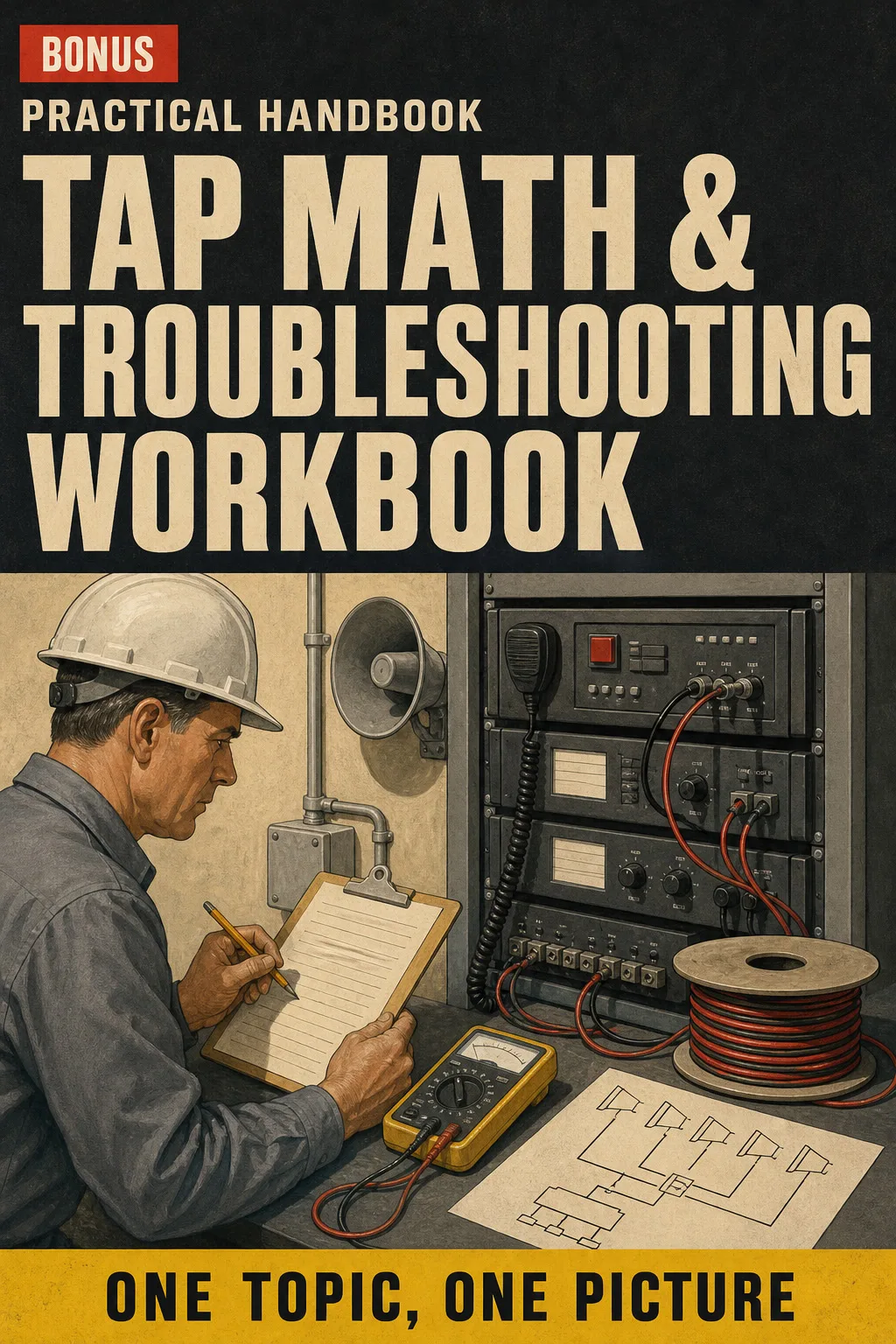
Tap Math & Troubleshooting Workbook

BONUS 1: «Tap Math & Troubleshooting Workbook»

Value on its own: US$ 17.90

Practice the work before you're on site: tap-setting and amplifier-loading exercises, plus open, short and ground-fault scenarios, each with its answer drawn out.

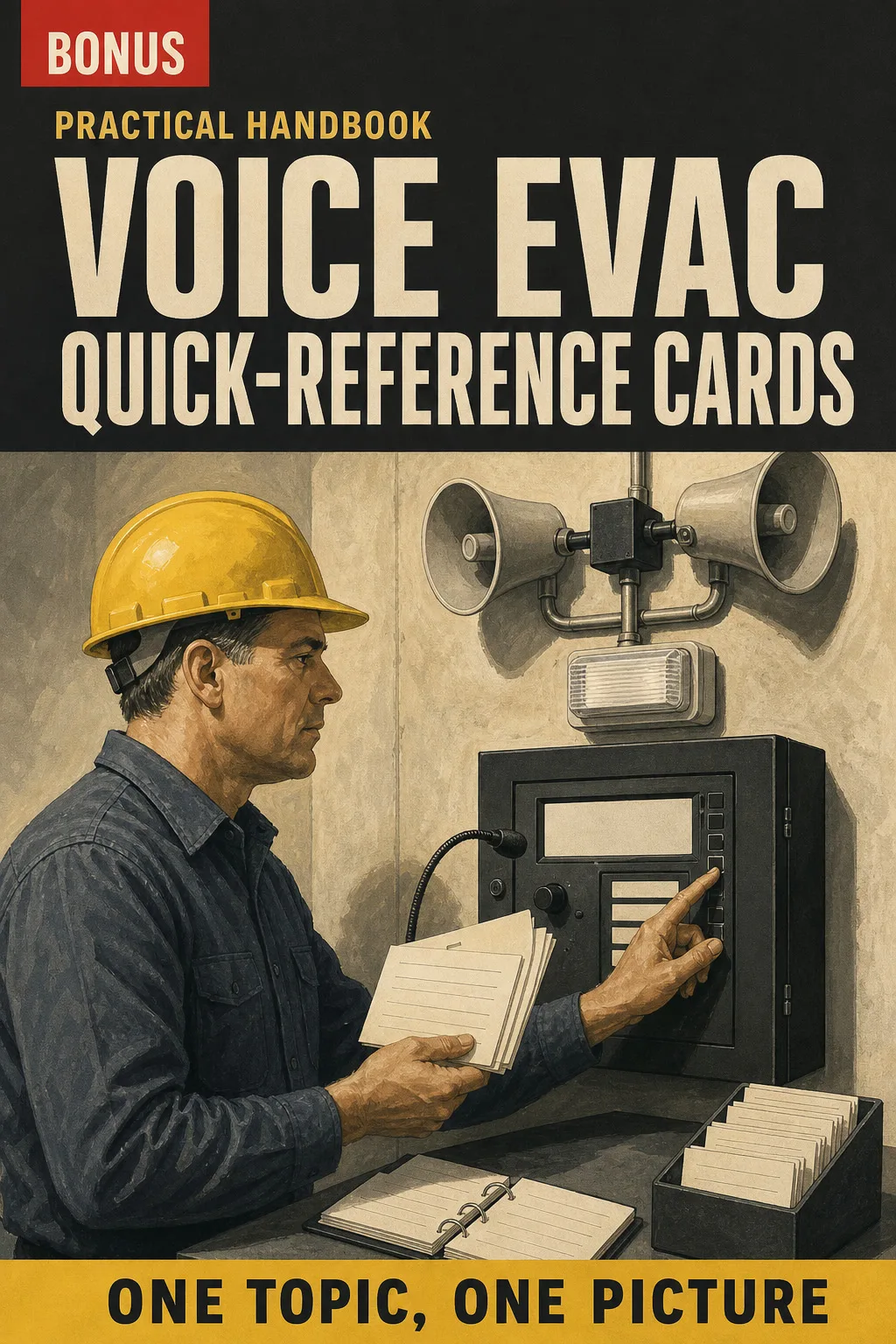
Voice Evac Quick-Reference Cards

BONUS 2: «Voice Evac Quick-Reference Cards»

Value on its own: US$ 14.90

The things you need to have on hand on one page each: tap math, trouble symptoms and where to look, message priorities and test order. Print them and keep them in the truck.

Voice Evacuation Systems Illustrated with 2 Free Books

  • Voice Evacuation Systems Illustrated: 69 illustrated pagesUS$ 63
  • BONUS 1: Tap Math & Troubleshooting WorkbookUS$ 17.90
  • BONUS 2: Voice Evac Quick-Reference CardsUS$ 14.90
  • High-resolution PDF to printIncluded
Total value US$ 95.80
YOUR PRICE:
US$ 27
You save US$ 68.80
YES, I WANT VOICE EVACUATION SYSTEMS ILLUSTRATED FOR US$ 27

📄 This is a digital PDF book sent to your email: nothing is printed or shipped.

Secure purchaseEncrypted payment30-day guarantee

PDF by email: We email you Voice Evacuation Systems Illustrated as a PDF, together with the two free books. It's a single payment: no installments, no extra charges.

Who This Book Is For

You're moving into voice evac

You're moving into voice evac

You come from conventional panels, data or security. You get the whole voice system drawn, from the amp to the last speaker, in the same order every time.

You have an acceptance test coming up

You have an acceptance test coming up

The six things to have on the clipboard, the test order and what the inspector usually asks, each on its own page, so you can explain every step out loud.

You already service voice systems

You already service voice systems

A reference to keep in the truck: tap math, trouble symptoms and where to look, cable ratings and test intervals, ready to print.

Everything You Get Today

US$ 95.80US$ 27
YES, I WANT VOICE EVACUATION SYSTEMS ILLUSTRATED FOR US$ 27

📄 This is a digital PDF book sent to your email: nothing is printed or shipped.

30DAYS
GUARANTEE

30-Day Guarantee

Try Voice Evacuation Systems Illustrated for 30 days, bonus books included.

We refund everything if the file won't open, if the book isn't what you see here, if you were charged twice or if the email doesn't arrive. Just email us.

You pay once. No subscriptions.

Frequently Asked Questions

Is this for me if I already have years on conventional fire alarm panels?

Yes. It doesn't teach you how to pull wire. It starts at what changes when the system talks: amplifiers, taps, speaker layout, intelligibility, troubles and acceptance testing.

Where does the content come from?

It's checked against the current edition of NFPA 72, including its annex on speech intelligibility, and NFPA 70 (NEC) Article 760. Some jurisdictions enforce an older edition, so confirm thresholds and test intervals against the edition your AHJ uses.

Is this official material?

No. It's an independent illustrated guide, not affiliated with or endorsed by NFPA or any authority having jurisdiction. It doesn't reproduce code text or tables.

Does it replace training or the manufacturer's instructions?

No. It helps you understand and review the system. Formal training, the manufacturer's instructions and the code your AHJ enforces always come first.

Is it a NICET prep book? Do I get a certificate?

No certificate, and it isn't an exam prep course. It explains how voice systems work and how they're tested, which helps whatever you're studying for. The tap math and troubleshooting exercises are written for this book, not taken from NICET or any other exam.

When and how do I get it?

The book and the 2 bonus books come as PDFs by email, to the address you enter at checkout.

Do I have to pay every month?

No. It's a one-time payment. No subscription.

Can I have it on paper?

Yes. The PDFs are made to print, so you can keep the pages and the quick-reference cards in the truck.

How does the refund work?

You have 30 days. We refund everything if the file won't open, if the book isn't what you see on this page, if you were charged twice or if the email doesn't arrive: just email us.

Before You Close This Page

No more rereading the code with nothing sticking.

The taps on a speaker circuit: you see them drawn and you're done.

You walk into the acceptance test knowing where everything is.

Drawings make studying faster.

The book is right below.

One-time payment: US$ 27 · Guarantee: 30 days · PDF by email

YES, I WANT VOICE EVACUATION SYSTEMS ILLUSTRATED FOR US$ 27

📄 This is a digital PDF book sent to your email: nothing is printed or shipped.